0
0


Why Your Sleep Got Worse in Your 30s

Let me guess. You used to fall asleep anywhere. On the couch, in the car, at a friend’s place with the lights still on. Sleep was never something you thought about because it just happened.
Now you’re past your 30s and something has shifted. You wake up at 2am for no reason. You lie there for an hour doing mental math on how much sleep you’ll get if you fall back asleep right now. You sleep 7 or 8 hours and still feel like you didn’t sleep at all. You started Googling “why can’t I sleep anymore” at some point in the last year.
You’re not broken. This is biology. And nobody warned you it was coming.
Your Body Changes
Starting around age 30, your body begins producing less deep sleep. Not less sleep overall, less of the good stuff. Deep sleep is the stage where your body does its real maintenance work: tissue repair, immune function, memory consolidation, growth hormone release. It’s the part of sleep that actually makes you feel rested.
And it’s the first thing to go.

At the same time, your body starts producing less melatonin. That’s the hormone that tells your brain it’s time to sleep. So the signal to fall asleep gets weaker and the quality of the sleep you do get declines. Both at the same time.
That’s why you’re sleeping the same number of hours but waking up feeling worse. You’re getting less of the sleep that actually counts.
Life Piles On
The biology alone would be enough. But your 30s also happen to be the decade where everything else stacks up.
Career pressure. Kids. A mortgage. Aging parents. Financial stress. The mental load of managing a life that got a lot more complicated than it used to be.
All of that stress produces cortisol. And cortisol and melatonin work like a seesaw. When cortisol goes up, melatonin goes down. So when you’re stressed at 10pm, your body is literally suppressing the hormone it needs to fall asleep. Your brain is wired for survival, not rest. And when it senses stress, rest loses every time.
New parents lose an average of three hours of sleep every night in their baby’s first year. Nearly 4 in 5 pregnant women report new sleep problems.
Add in the screens, the late-night scrolling, the “one more episode”, and the glass of wine that feels like it helps but actually reduces deep sleep by up to 39%. Your biology is declining and your lifestyle is making it worse. Double hit.
Bad Sleep Reduces Brain Function
Researchers at UCSF tracked 526 people from their mid-30s to late 40s. Almost half reported poor sleep. They averaged just six hours a night. Eleven years later, the researchers went back and tested their cognitive function. The people who had the worst sleep in their 30s had the worst memory and decision-making performance over a decade later.
Bad sleep in your 30s doesn’t just make tomorrow harder. It shapes how your brain works in your 40s, your 50s and beyond. Sleep medicine research shows that what you do about your sleep now can significantly impact your cognitive health for decades.
Source: Neurology, 2024. UCSF CARDIA Sleep Study, 526 participants, 11-year follow-up.
The Melatonin Trap
So what do most people do when sleep gets worse? They reach for melatonin.
Here’s the problem: your body is already producing less melatonin naturally. That’s part of why your sleep changed. Flooding your system with 5, 10, or 15mg of a hormone your body only needs a fraction of a milligram of doesn’t fix the underlying issue. It just overrides the signal.
Melatonin tells your brain it’s nighttime. That’s all it does. It doesn’t improve the quality of your sleep, it doesn’t help you stay asleep and it doesn’t address the deep sleep decline that’s actually causing the problem.
The result? You fall asleep a bit faster but you still wake up at 3am, you still feel groggy in the morning and now you’re wondering if you need a higher dose.
You don’t. You need a different approach.
Sleep+ Was Built for This

Your body has an endocannabinoid system that regulates sleep, stress, inflammation and pain. It’s separate from your circadian clock and it plays a direct role in how deeply you actually sleep. That’s the system melatonin doesn’t touch.
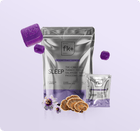
Sleep+ gummies combines CBN with CBD, Valerian Root, Passionflower and Turkey Tail. CBN works with your endocannabinoid system to improve sleep architecture, meaning more time in the deeper stages where your body actually recovers. Valerian Root and Passionflower increase GABA to calm your nervous system. Turkey Tail supports immune recovery while you sleep.
Precisely dosed. No dependency. It's not a stronger version of melatonin, it's a completely different approach to the actual problem.
Your sleep changed in your 30s because your biology changed and your life got more demanding. You need something that works with the system your body already has.
That’s what Sleep+ is for.